School Can Be Fun: How Games and Interactive Learning Change Things
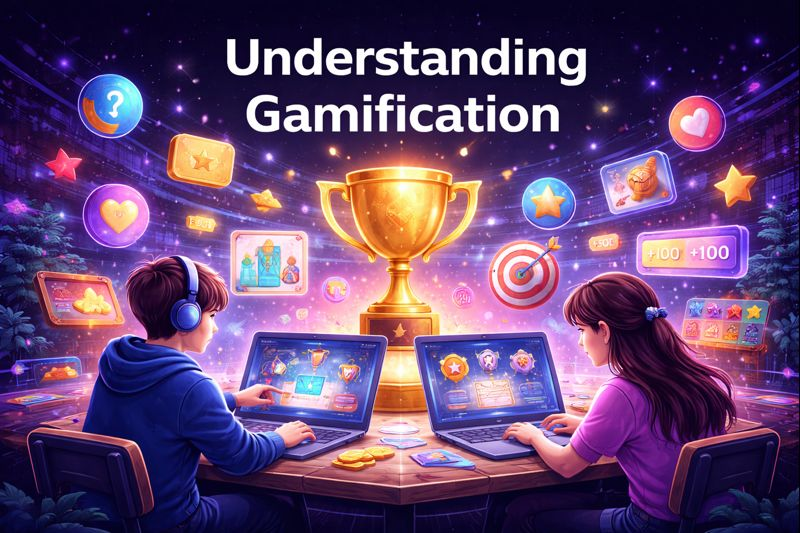
Putting games and interactive stuff into classrooms is a big deal right now. They’re changing how teachers teach and how kids learn, making school more interesting and work better. When we talk about gamification, we mean adding game-like things like points, badges, and challenges to schoolwork. Interactive learning is all about getting students to use digital tools and things they can actually touch and use to learn. If you put these two together, learning goes from just listening to actually doing, which makes school much better and even enjoyable.

Gamification works because it taps into how we naturally learn. Kids build knowledge by doing and thinking. Games use rewards, fun challenges, and give kids some control, which keeps them focused and trying hard.
The best part about gamification is it makes you want to learn just for the fun of it, and also for the rewards. When you get points for doing well, it feels good, making learning feel more like play than work. This is super helpful for kids who have trouble paying attention or feel unsure of themselves.
Apps like Kahoot!, Quizizz, Classcraft, and Duolingo are good examples of how these game-like systems can give you small pieces of learning that change to fit you. They push you to compete, work with others, and get instant feedback. Research shows these tools really help with getting students involved, remembering things, and participating in class.
Interactive learning is kind of similar to gamification. It’s all about letting students be in charge and interact in real-time. It uses digital stuff like smart whiteboards, tablets, simulations, and virtual or augmented reality to let students learn by doing.
With sites like PhET Interactive Simulations, students can play around with different things in fake experiments. This helps them really get new ideas without the usual limits of a real science lab.
Gamification and interactive learning also help teachers keep an eye on how students are doing with live quizzes, polls, and choose-your-own-path simulations that give instant feedback. Teachers can use special screens to see how everyone is doing and change their teaching for each student.
Even with all these good things, we need to be careful. Too much gamification can make kids tired of it or too competitive. Also, if some kids don’t have good internet or computers, it can make school unfair.
So, gamification and interactive learning are a great mix of teaching ideas, psychology, and tech. They’re changing education, making it more about the student and a lot more fun.
Sources
Deterding, S. et al. (2011). From Game Design Elements to Gamefulness. ACM.
Hamari, J., Koivisto, J., & Sarsa, H. (2014). Does Gamification Work? Hawaii International Conference on System Sciences.
Domínguez, A. et al. (2013). Gamifying Learning Experiences. Computers & Education.
Gee, J. P. (2007). What Video Games Have to Teach Us About Learning.
PhET Interactive Simulations — University of Colorado Boulder