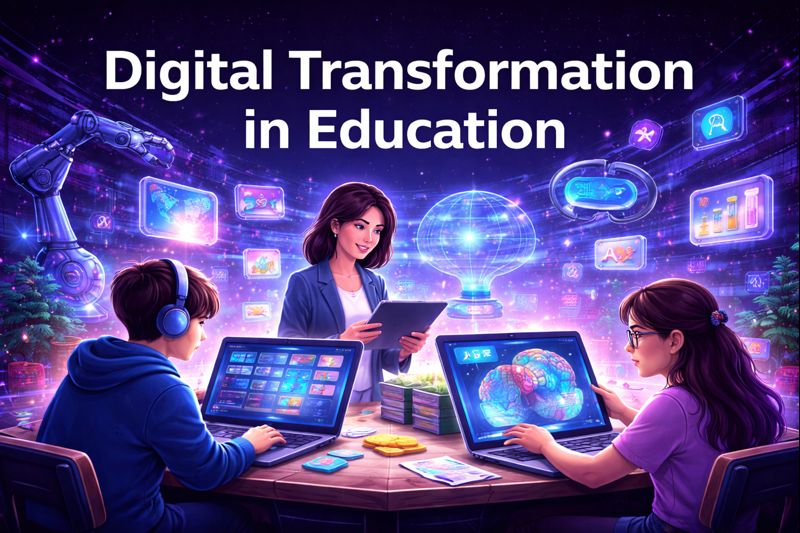
Digital transformation in education is often treated as a buzzword, but in practice it marks a clear change in how classrooms function and how learning happens. Technology is no longer an add-on to teaching. It is reshaping the structure of education itself. Traditional lecture-heavy models are slowly giving way to approaches that adapt to students, rather than forcing students to adapt to rigid systems. This shift is not about posting assignments online or logging in from home. It requires schools to reconsider how instruction works, what learning outcomes matter, and how students are prepared for a world shaped by digital systems.
One of the most visible changes can be seen in the spread of learning management systems like Moodle, Canvas, and Google Classroom. These platforms combine assignments, readings, messages, and grades into a single place. When paired with cloud computing, they allow students and teachers to work together without being in the same location, or even the same time zone. The long-standing assumptions about when and where learning must take place are starting to fade (Basak et al., 2016). Video conferencing tools such as Zoom and Microsoft Teams pushed this shift further, making live discussion and collaboration possible well beyond campus walls. During the COVID-19 pandemic, these tools moved from convenience to necessity, forcing rapid digital adoption across education systems that had resisted change for years.
Artificial intelligence and data analytics are also becoming part of everyday learning. AI-based tools monitor how students interact with material, highlight patterns of difficulty, and recommend targeted support. Intelligent tutoring systems and chatbots offer assistance outside of class hours, while predictive analytics help identify students who may be at risk before problems become severe (Holmes et al., 2019). Adaptive learning platforms take a more dynamic approach, adjusting content difficulty as students progress. The result is learning that feels more flexible and personal, particularly for students with different backgrounds or learning needs.
Immersive technologies are expanding what learning can look like. Virtual reality, augmented reality, and simulations allow students to experience subjects rather than just read about them. Medical students practice procedures in virtual clinics. Engineering students test systems in simulated environments. History students explore digital reconstructions of past civilizations. These tools engage multiple senses and help turn abstract concepts into experiences that are easier to understand and remember (Radianti et al., 2020). Gamification adds another layer, using challenges, rewards, and feedback to keep students involved and motivated.
Digital transformation also affects what happens behind the scenes. Administrative systems are increasingly automated and data-driven. Admissions, attendance, grading, and credentialing are managed through digital platforms that reduce manual work and improve transparency. Cloud-based systems connect departments across institutions, allowing leaders to track outcomes, resource use, and performance in real time. This data supports faster and more informed decisions about how schools operate.
The shift is not without problems. Access to technology remains uneven, particularly in underfunded or rural communities. Teachers are also asked to change their role, moving away from delivering content and toward guiding students through digital learning environments. At the same time, concerns about data privacy, cybersecurity, and bias in algorithm-driven tools have grown more urgent. As digital systems become standard, schools must develop clear policies and ethical safeguards to protect students and educators alike (Selwyn, 2016).
Digital transformation in education is not a finished project. It is ongoing, shaped by new tools, new expectations, and changing social realities. When approached thoughtfully, it can help students become more independent and adaptable learners, while allowing schools to evolve without losing the human relationships at the center of education. Technology alone does not improve learning. The impact depends on how it is used, and whether it helps students stay curious, supported, and engaged.
Sources
Basak, S. K., Wotto, M., & Bélanger, P. (2016). E-learning, M-learning and D-learning: Conceptual definition and comparative analysis. E-Learning and Digital Media.
Holmes, W., Bialik, M., & Fadel, C. (2019). Artificial Intelligence in Education: Promises and Implications for Teaching and Learning. Center for Curriculum Redesign.
Radianti, J., Majchrzak, T. A., Fromm, J., & Wohlgenannt, I. (2020). A systematic review of immersive virtual reality applications for higher education. Education and Information Technologies.
Selwyn, N. (2016). Education and Technology: Key Issues and Debates. Bloomsbury Academic.