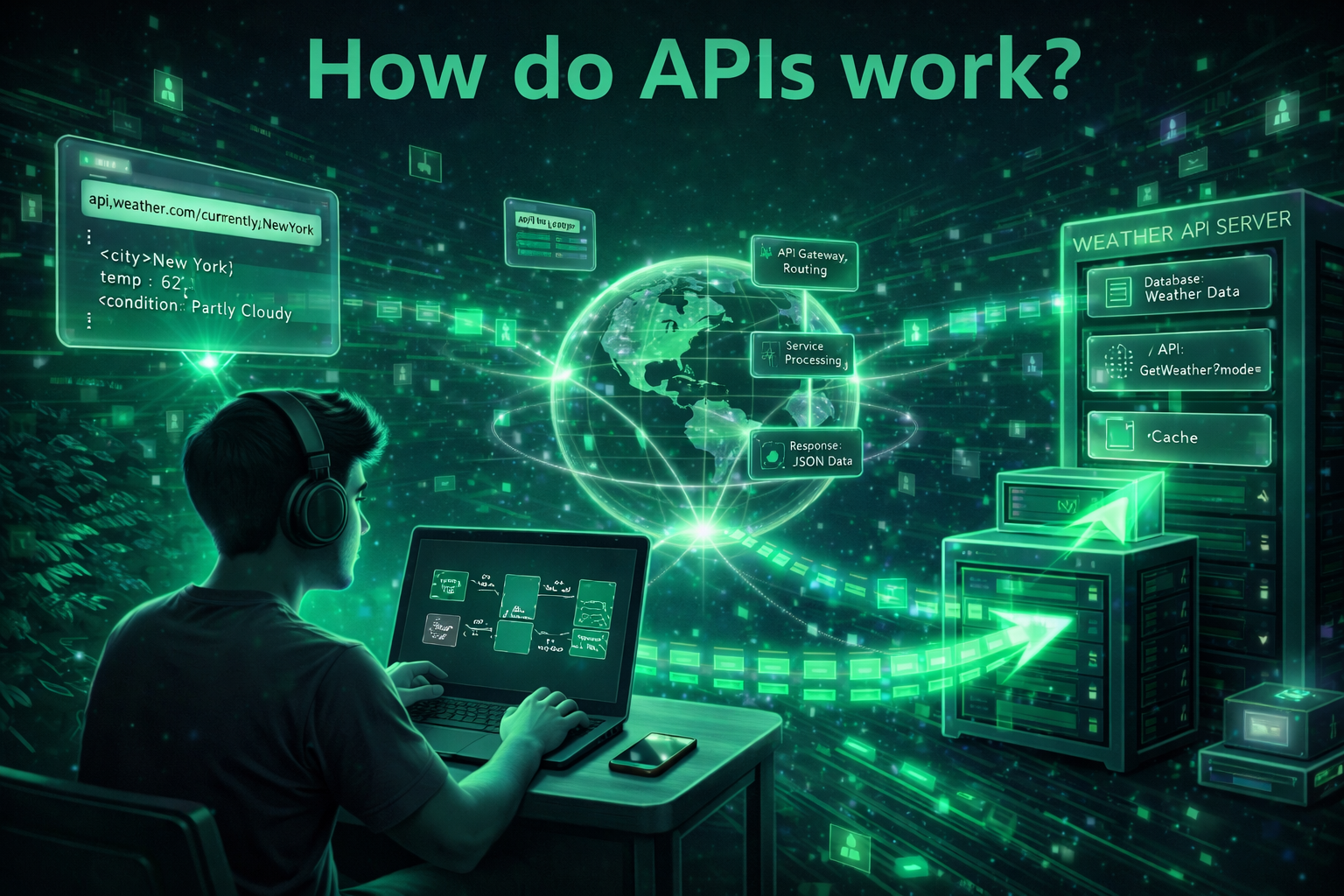
Most folks hear “API” and pretend they know what it means. These days, nearly every app uses them behind the scenes – but explanations? Often missing. Suddenly, once it clicks, so much about digital tools makes sense. Truth is, APIs aren’t complex at all. The word just feels heavy on the tongue.
What An Api Actually Is
Here’s the thing about APIs. They’re really just messengers between apps. When one app needs data, it sends out a request. In reply, another system hands back what was asked for. Think of them like waiters taking orders from your table to the kitchen. Rules shape every exchange they manage. That structure keeps things running without chaos. Without these guidelines, confusion takes over fast.
Software cannot share its inner workings directly. That approach invites chaos. A better path emerged long ago. Boundaries keep things stable. These lines are called APIs. One program asks something of another through them. Requests follow strict formats. Answers come back shaped a certain way. Inside secrets stay hidden. Outside users get just enough power. Order replaces confusion. Complexity becomes manageable. Systems grow without breaking. Connections remain predictable. Such structure allows digital life to function today.
A simple example
APIs connect software systems using shared rules. Picture a diner stepping into a café instead of charging into the cook area. They take a seat, scan what’s offered, then hand over their request. What happens behind those swinging doors stays hidden – meals come out ready. That space where pots simmer and orders get built? That’s where data lives too. No reaching past the counter. Just wait. Then eat. What you see on the page acts like a guide. Placing your choice comes next, similar to sending a signal. What arrives later matches what was asked. Knowing the steps behind it isn’t required. Following along using the list makes it work. A meal appears when the path is clear.
Using an API tends to be straightforward. From your app, a message goes out – either seeking data or triggering some task. After getting this note, the system handles what was asked and replies accordingly. Most times, the answer arrives packed in JSON, a clear format that lines up details neatly for machines. Nothing mystical occurs here. Communication runs on structure.
Why APIs matter
Most people don’t notice them, yet they’re everywhere. Checking the forecast? That pulls data through an invisible link. Turn-by-turn directions work because separate systems talk behind the scenes. Signing in with a single button ties your identity across platforms without you typing anything new. Buying something online often chains several backend tools together quietly. Each app on your phone is really just stitched parts acting like one.
What keeps tech running quietly behind the scenes? APIs do. They connect pieces so programs can handle huge crowds online. One team works here, another there – no stepping on toes. Old tools get a second life rather than tossed out. Private information stays locked down by design. Break one part without breaking everything else – that’s how they help. Building fast becomes possible when parts talk smoothly. Imagine updating software like fixing a car while driving – it happens thanks to these links. No API means chaos: shaky apps, long waits, constant breakdowns. Trying to keep things working would feel like juggling broken clocks.
Here’s the core idea. Not a secret tool for coders only. Think pipes under city streets, moving data where it needs to go. Without them, apps clash like traffic at a broken light. See how they connect pieces, suddenly screens make sense, confusion fades into clarity.
Sources
- MDN Web Docs. What is an API?
https://developer.mozilla.org/en-US/docs/Learn/JavaScript/Client-side_web_APIs/Introduction - Red Hat. What is an API?
https://www.redhat.com/en/topics/api/what-is-an-api - Amazon Web Services. What is an API?
https://aws.amazon.com/what-is/api/ - IBM. API Explained
https://www.ibm.com/topics/api - Cloudflare. What Is an API?
https://www.cloudflare.com/learning/security/api/what-is-an-api/